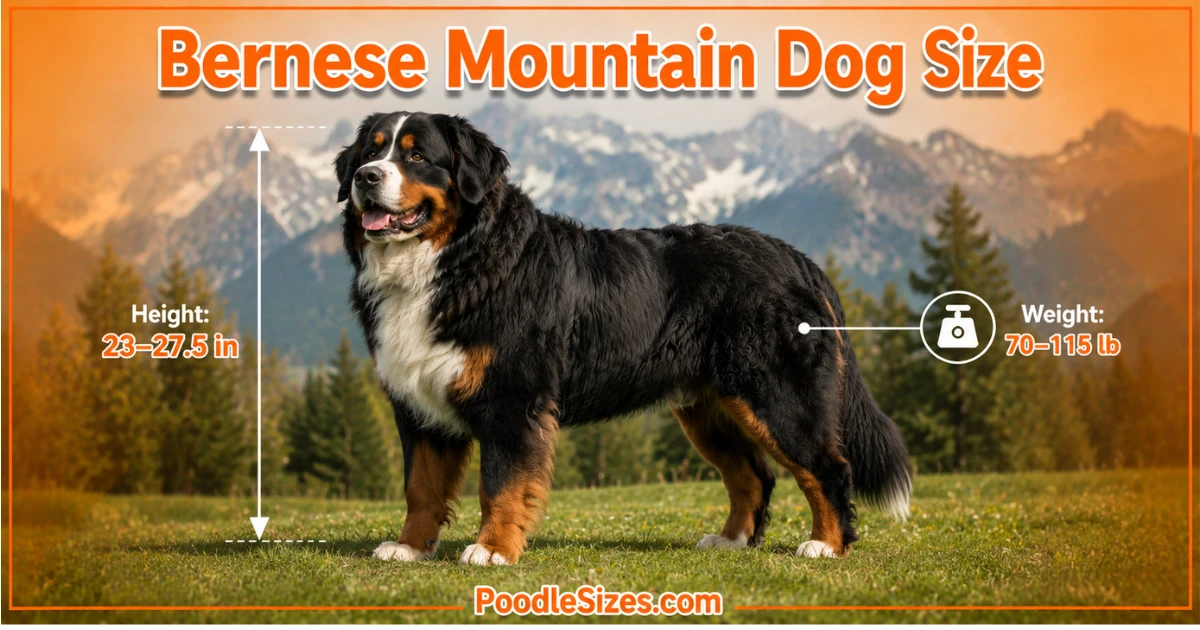
A full-grown Bernese Mountain Dog size typically falls between 23 and 27.5 inches (58–70 cm) at the shoulder, with an adult weight of 70 to 115 pounds (32–52 kg). This places the breed firmly in the giant breed category, and males consistently run larger and heavier than females.
Most Bernese Mountain Dogs reach their full height by 12 to 18 months, but they keep filling out in muscle and bone density until around 2 to 2.5 years old. This guide covers every size detail you need, from official breed standard numbers to the growth timeline and real-life size comparisons.
Bernese Mountain Dog Size Overview
The Bernese Mountain Dog is a large to giant working breed, built for strength rather than speed. Its size reflects its history as a Swiss farm dog used for pulling carts, driving cattle, and guarding property.
Below is a quick snapshot of the key numbers before we break each one down in detail.
Bernese Mountain Dog Height and Weight

Height is measured at the withers, meaning the highest point of the shoulder blades, and this is the figure used in the official breed standard. Weight is not fixed by the written standard, so it varies more widely based on bone structure, diet, and individual build.
A healthy adult Berner should look balanced and muscular, not thin or overly bulky. Weight outside the typical range isn’t automatically a problem, but a vet can confirm whether an individual dog’s body condition is appropriate.
Bernese Mountain Dog Average Size at a Glance
- Height (withers): 23–27.5 inches (58–70 cm)
- Weight: 70–115 pounds (32–52 kg)
- Body length: roughly 35–41.5 inches (89–105 cm), depending on sex
- Full height reached: 12–18 months
- Full weight and muscle reached: 2–2.5 years
- Breed size class: giant working breed
- Average lifespan: 7–10 years
Bernese Mountain Dog Shoulder Height (Withers) Explained
Bernese Mountain Dog Standing Height vs Shoulder Height
Standing height, measured from the ground to the top of the head when the dog is alert, is naturally taller than withers height. For a Bernese Mountain Dog, overall standing height typically runs around 30 to 36 inches (76–91 cm).
This number is useful for picturing the dog’s real presence in a room, but it isn’t used in official size standards because head position changes it too easily.
Bernese Mountain Dog Length (Body Length)
Body length, measured from the point of the shoulder to the point of the rear, generally falls between 35 and 41.5 inches (89–105 cm), with males running longer than females. The breed standard calls for a slightly rectangular outline, meaning body length is a bit greater than shoulder height rather than perfectly square.
This proportion gives the Bernese Mountain Dog its sturdy, ground-covering build, which suited its original work pulling carts and driving cattle across uneven terrain.
Minimum and Maximum Bernese Mountain Dog Size
The smallest adult females can measure close to 23 inches (58 cm) and around 70 pounds (32 kg), while the largest males can reach 27.5 inches (70 cm) and 115 pounds (52 kg) or slightly more. Dogs outside these figures aren’t necessarily unhealthy, since bone structure and individual genetics play a role.
A Berner significantly heavier than 115 pounds with poor muscle tone may be carrying excess weight rather than healthy mass, which adds strain to the joints.
Male vs Female Bernese Mountain Dog Size
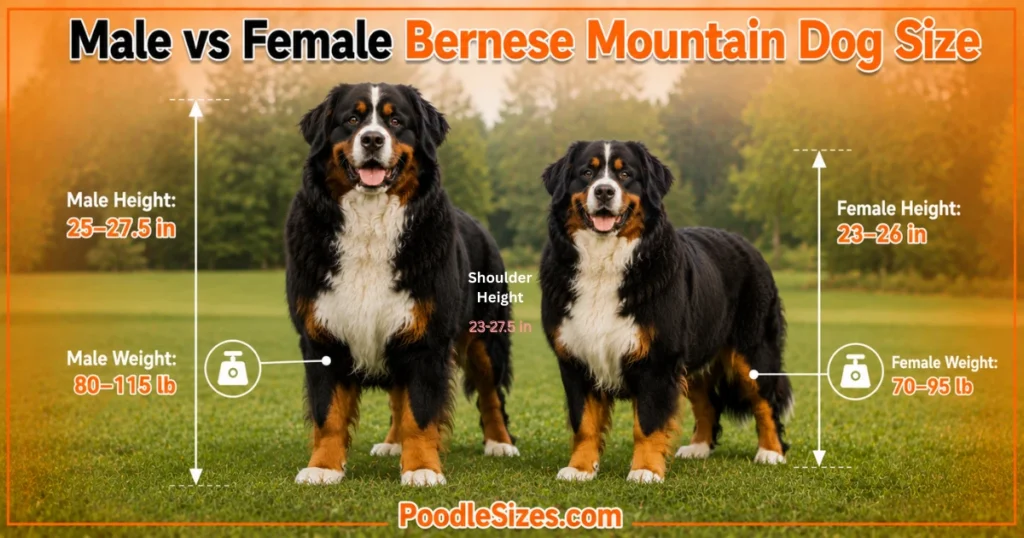
Male Bernese Mountain Dogs stand about 25 to 27.5 inches (64–70 cm) at the shoulder and weigh 80 to 115 pounds (36–52 kg). Their frame is noticeably heavier-boned than a female’s.
Female Bernese Mountain Dogs are smaller, standing 23 to 26 inches (58–66 cm) and weighing 70 to 95 pounds (32–43 kg). Females also tend to mature slightly faster than males.
Bernese Mountain Dog Growth Chart (Puppy to Full-Grown)

Bernese Mountain Dog growth happens quickly in the first year and then slows as the dog finishes maturing. Because this is a giant breed, growth needs to be steady rather than rushed, since rapid weight gain in puppyhood is linked to joint problems later on.
The figures below are general averages. Individual puppies, especially across different bloodlines, can vary.
Bernese Mountain Dog Growth Chart by Age
- 8 weeks: 10–15 lb (4.5–6.8 kg)
- 3 months: 25–35 lb (11–16 kg)
- 6 months: 50–65 lb (23–29 kg)
- 9 months: 65–80 lb (29–36 kg)
- 12 months: 75–95 lb (34–43 kg), close to full height
- 18 months: 80–105 lb (36–48 kg)
- 24 months: full adult weight, 70–115 lb (32–52 kg)
If a puppy’s weight suddenly jumps, drops, or stalls compared to this pattern, a veterinary check-up is the right next step.
When Is a Bernese Mountain Dog Full-Grown?
A Bernese Mountain Dog is usually full height by 12 to 18 months, but full-grown in terms of muscle, chest depth, and bone density takes until around 2 to 2.5 years. This slower fill-out period is typical of giant breeds and shouldn’t be mistaken for a health issue.
Puppy Size vs Adult Size Comparison
Paw size is a less reliable predictor of adult size in Bernese Mountain Dogs than it is in some other breeds. A more useful indicator is the puppy’s weight at 6 months, along with the size of its parents, since genetics play the biggest role in final adult size.
Bernese Mountain Dog Growth Plates and Joint Development
Growth plates in a Bernese Mountain Dog’s long bones typically close between 12 and 18 months, and until then, the joints are more vulnerable to stress. High-impact exercise, repeated jumping, or rapid weight gain during this window increases the risk of hip and elbow dysplasia, a condition already common in large and giant breeds.
Keeping a growing Berner at a lean, steady weight and avoiding forced high-impact activity protects joint health well into adulthood.
Bernese Mountain Dog Breed Standard Size
AKC Bernese Mountain Dog Size Standard

Under the AKC breed standard, male Bernese Mountain Dogs should measure 25 to 27.5 inches (64–70 cm) at the withers, and females should measure 23 to 26 inches (58–66 cm). Weight is not specified in the written standard, since it isn’t considered a defining breed trait the way height is.
Average Size vs Breed Standard Size
Pet Bernese Mountain Dogs often weigh more than the informal “ideal” weights sometimes quoted for the show ring, largely because weight isn’t standardized and varies with diet and activity level. A dog can meet the height standard exactly while still being noticeably heavier or lighter than another dog of the same height, depending on build and condition.
Bernese Mountain Dog Size Comparison
Bernese Mountain Dog vs Other Large and Giant Breeds

- Bernese Mountain Dog vs Great Pyrenees: similar height, but the Great Pyrenees usually weighs more, up to 120+ pounds (54+ kg)
- Bernese Mountain Dog vs Newfoundland: the Newfoundland is typically heavier and stockier, often exceeding 130 pounds (59 kg)
- Bernese Mountain Dog vs Saint Bernard: the Saint Bernard is taller and considerably heavier, sometimes over 180 pounds (82 kg)
- Bernese Mountain Dog vs Golden Retriever: the Golden Retriever is notably smaller, averaging 55–75 pounds (25–34 kg)
How Big Is a Bernese Mountain Dog Compared to a Human?

When standing on all fours, an adult Bernese Mountain Dog’s shoulder reaches roughly the mid-thigh to hip height of an average adult. When the dog stands up on its hind legs, it can approach the shoulder height of a shorter adult, which gives a sense of just how substantial this breed is in person.
Bernese Mountain Dog Size and Home/Equipment Needs
Because of its size, a Bernese Mountain Dog typically needs an XXL or 48-inch crate, a large-breed orthopedic bed, and enough vehicle space to lie down flat during travel. Doorways, furniture, and stair access should also be considered, since a fully grown Berner takes up meaningfully more room than a medium-sized dog.
FAQ’s About Bernese Mountain Dog Size
How big do Bernese Mountain Dogs get?
Adult Bernese Mountain Dogs typically stand 23 to 27.5 inches (58–70 cm) at the shoulder and weigh 70 to 115 pounds (32–52 kg), making them a giant breed.
What is the average weight of a full-grown Bernese Mountain Dog?
The average full-grown weight falls between 70 and 115 pounds (32–52 kg), with males typically weighing more than females.
At what age is a Bernese Mountain Dog fully grown?
Bernese Mountain Dogs usually reach full height by 12 to 18 months, but continue building muscle and bone density until about 2 to 2.5 years old.
Are male Bernese Mountain Dogs bigger than females?
Yes. Males typically stand 25 to 27.5 inches (64–70 cm) and weigh 80 to 115 pounds (36–52 kg), while females stand 23 to 26 inches (58–66 cm) and weigh 70 to 95 pounds (32–43 kg).
How much should a Bernese Mountain Dog puppy weigh at 3 months?
At 3 months old, a Bernese Mountain Dog puppy generally weighs 25 to 35 pounds (11–16 kg), though this varies by individual growth rate and parent size.
Is a 100-pound Bernese Mountain Dog overweight?
Not necessarily. A 100-pound (45 kg) Bernese Mountain Dog, especially a male, can fall within a healthy range if the weight comes from muscle and bone rather than excess fat. A vet body-condition check is the most reliable way to confirm this.
What is the biggest a Bernese Mountain Dog can get?
Large males can reach up to 27.5 inches (70 cm) at the shoulder and 115 pounds (52 kg) or slightly more, particularly with a heavier bone structure.
Do Bernese Mountain Dogs stop growing at 1 year?
Height growth largely stops by 12 to 18 months, but Bernese Mountain Dogs continue to fill out in weight, chest depth, and muscle until roughly 2 to 2.5 years old.

Hi, I’m Stella Quinn, the admin at PoodleSize.com. We simplify measurements with quick conversions, easy guides, and real-life size comparisons to help you find accurate answers fast.