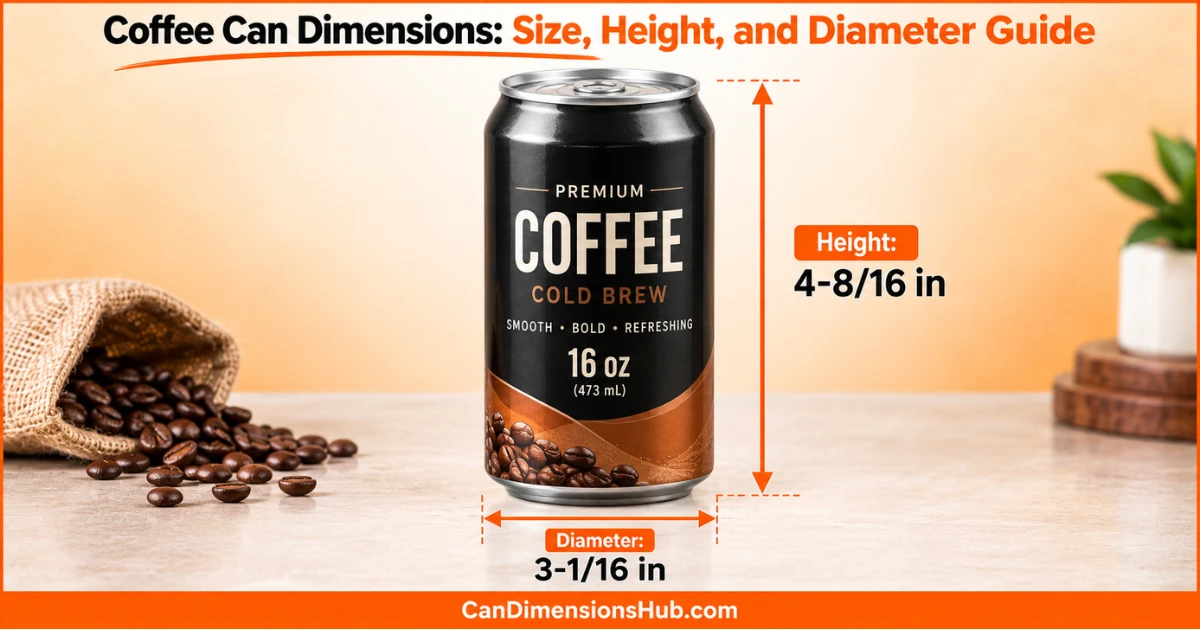
Coffee can dimensions range from small 3-ounce cans to large 100-ounce commercial containers.
Common sizes include 8, 12, 16, 28, and 32 ounces.
A standard 16 oz coffee can measures about 3-1/16 inches in diameter and 4-8/16 inches tall.
Can codes identify diameter and height using sixteenths of an inch.
Coffee Can Dimensions Chart
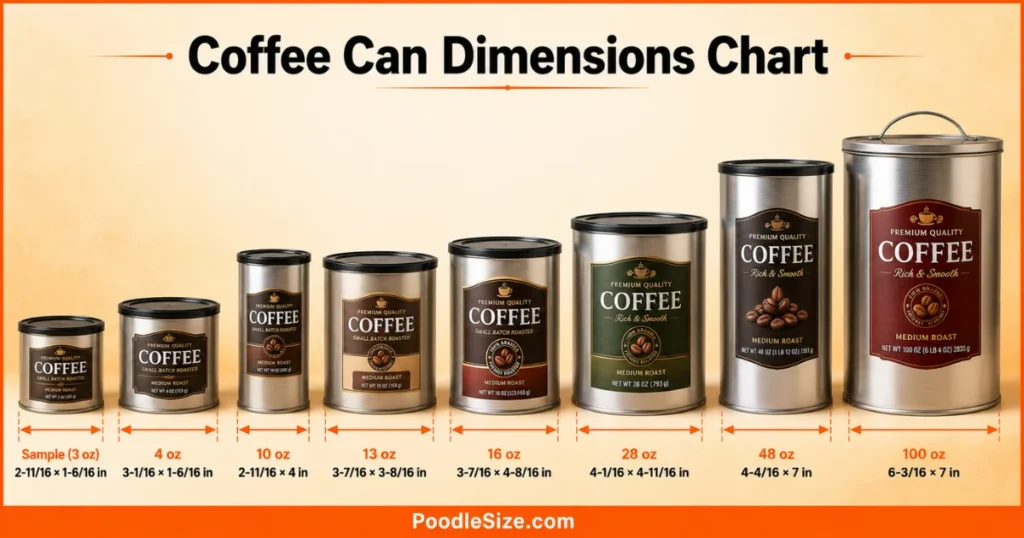
Here’s a quick reference covering the sizes you’ll actually run into, from single-serve samples to bulk institutional cans.
Standard Coffee Can Size Chart
| Can Code | Diameter × Height | Capacity | Common Use |
|---|---|---|---|
| 211×106 | 2-11/16″ × 1-6/16″ | 3 oz | Sample size |
| 301×106 | 3-1/16″ × 1-6/16″ | 4 oz | Single serve |
| #1 (211×400) | 2-11/16″ × 4″ | 10 oz | Standard retail |
| #2 Short (307×308) | 3-7/16″ × 3-8/16″ | 13 oz | Medium retail |
| 301×407 | 3-1/16″ × 4-8/16″ | 16 oz | Standard pound |
| #2.5 (401×411) | 4-1/16″ × 4-11/16″ | 28 oz | Value size |
| #3 Tall (404×700) | 4-4/16″ × 7″ | 48 oz | Commercial |
| #10 (603×700) | 6-3/16″ × 7″ | 100 oz | Bulk/institutional |
These codes aren’t a guessing game — they’re a shared manufacturing language. Any packaging plant in North America reads a 401×411 can the same way, which keeps lids, sealing equipment, and labels interchangeable across brands.
Reading the Can Code Format
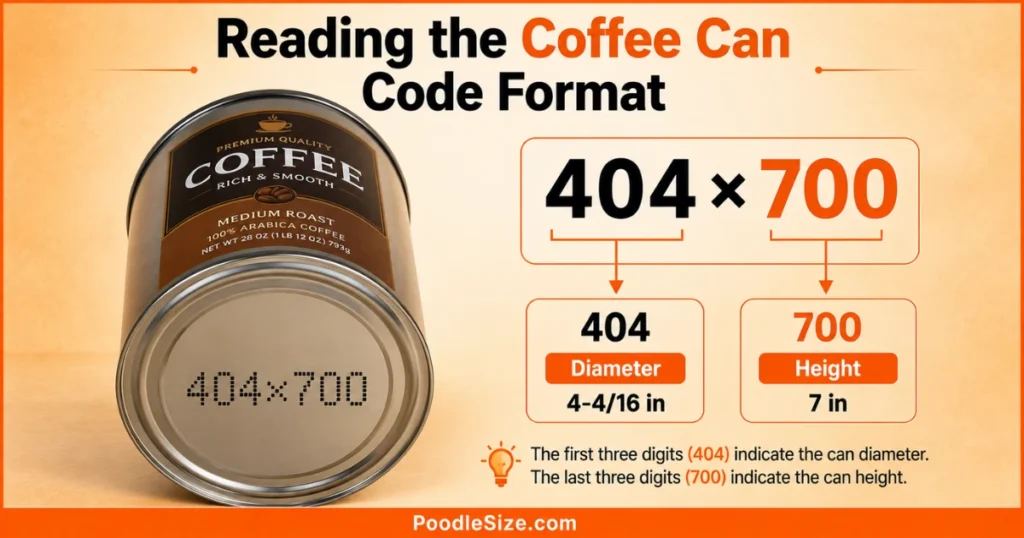
The code always breaks into two three-digit chunks. The first three digits give you diameter, the last three give you height, and both are measured in sixteenths of an inch.
So a code like 404×700 splits into 4 and 4/16 inches for diameter, and 7 and 0/16 inches for height. Once you know that pattern, you never need a chart again — you can decode the number stamped right on the can itself.
Coffee Can Sizes by Capacity
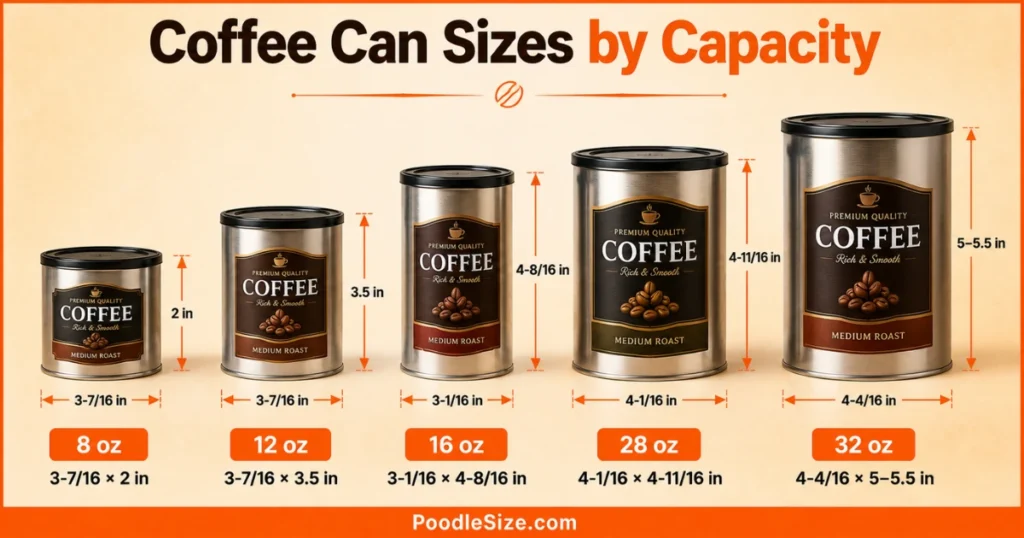
Sizing coffee cans by ounces is often more useful than sizing by code, especially if you’re shopping rather than manufacturing. Here’s how the main capacity tiers break down.
An 8-ounce can runs about 3-7/16 inches across and 2 inches tall. This size shows up constantly in gift sets and trial packs, since it’s small enough to sample a new roast without committing to a full bag.
A 12-ounce can measures roughly 3-7/16 inches by 3.5 inches. It’s become a favorite among specialty roasters because it undercuts the traditional pound size while still giving drinkers a real supply — about three-quarters of a pound.
The 16-ounce can, better known as the classic 1-pound size, measures 3-1/16 inches by 4-8/16 inches. This has been the benchmark size for the entire coffee industry for decades. Shoppers use it as their mental price comparison point, even when buying other sizes.
A 28-ounce can jumps to 4-1/16 inches by 4-11/16 inches. This value-tier size gives budget shoppers more coffee per container and a wider body for bolder label graphics.
The 32-ounce (2 lb) can typically measures around 4-4/16 inches by 5 to 5.5 inches tall. Warehouse clubs and heavy household coffee drinkers lean toward this format for the lower cost per ounce.
At the top end, 48-ounce and 100-ounce cans serve office coffee programs, restaurants, and institutions. The 100-ounce #10 can alone holds enough ground coffee for roughly 400 cups — a serious volume built for commercial kitchens, not home pantries.
Coffee Can Diameter and Height Explained
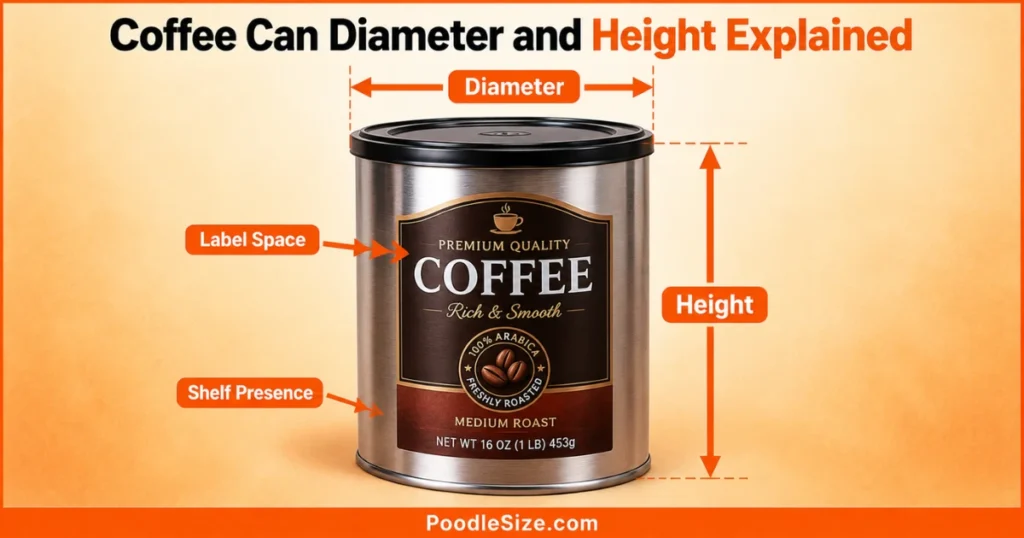
Diameter and height don’t just determine capacity — they shape how a can performs on a shelf and in a shipping crate.
Diameter and Label Space
Wider cans give brands more room to print. An 8-ounce can offers around 21 square inches of label area, while a 28-ounce can jumps to nearly 45 square inches. That extra surface matters commercially — it’s space for certifications, origin stories, and brew instructions that smaller cans simply can’t fit.
Diameter also controls how many cans fit per shelf row. Narrower cans pack tighter, which is one reason small-format and sample cans stay slim rather than short and wide.
Height and Shelf Presence
Height plays a different role. Taller cans stand out visually and create a stronger shelf presence, which is why premium and specialty brands often favor height over width. Shorter, wider cans trade that visual pop for better stability — they’re less likely to tip during shipping or when a shopper reaches past them on a crowded shelf.
Together, diameter and height form a trade-off brands weigh constantly: visibility versus stability, and label space versus shelf efficiency.
How to Measure Coffee Can Dimensions
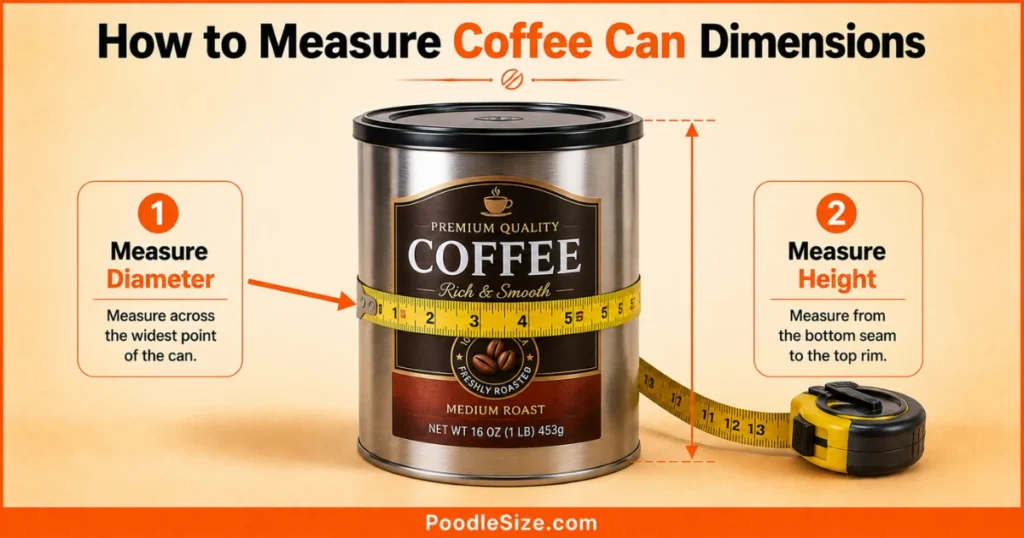
Sometimes you need real numbers, not a spec sheet — especially with vintage cans or unlabeled containers.
Start by measuring diameter across the widest point of the can, usually right at the top rim. Then measure height straight up from the bottom seam to the top rim, leaving out any lid or cap that extends beyond it. Once you have both numbers in inches, you can convert them into the standard three-digit code format if you need to match it against a manufacturer’s chart.
Does Coffee Can Size Affect Freshness
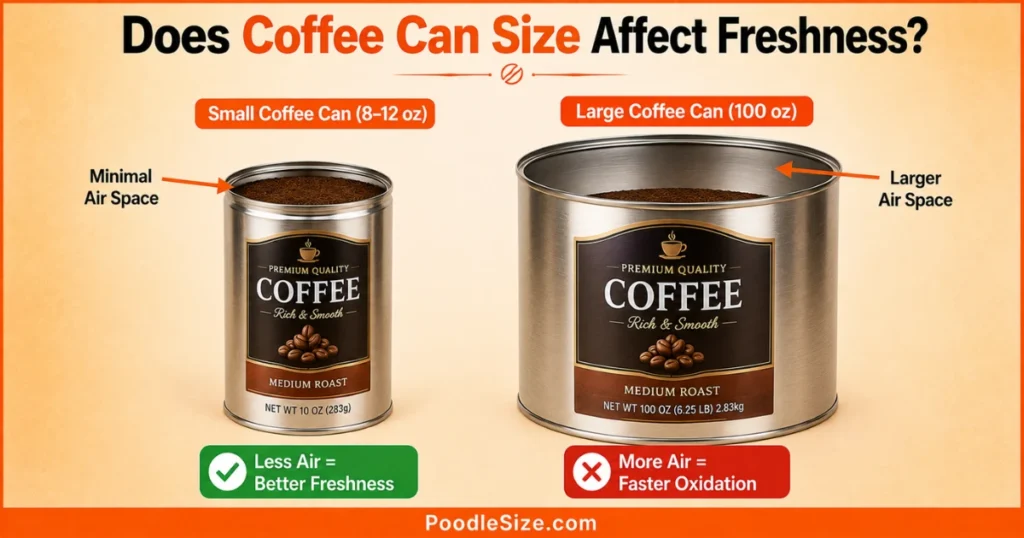
Yes, and this is one of the most overlooked facts in coffee packaging. Larger cans trap more air space once opened, and that extra air accelerates oxidation, which is the main cause of stale, flat-tasting coffee. A smaller can that gets used up quickly keeps coffee fresher simply because there’s less time for air exposure between opening and finishing it.
This is a big reason specialty roasters lean toward 8 to 12-ounce cans instead of bulk formats — freshness matters more to that market than cost per ounce.
Choosing the Right Coffee Can Size
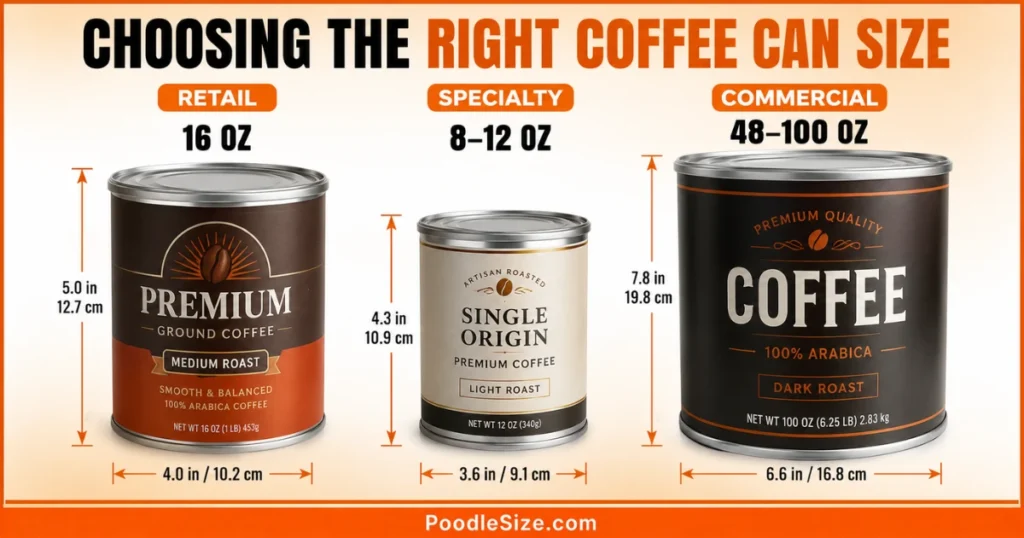
Picking a size isn’t just about capacity. It depends on who’s buying, how fast they’ll use it, and how the can needs to perform in transit and on shelf.
Retailers targeting everyday grocery shoppers usually stick with the 16-ounce standard, since it’s the size customers already trust and compare prices against. Specialty and craft roasters increasingly favor smaller 8 to 12-ounce formats, betting that freshness and trial-friendly pricing outweigh the lower per-ounce value. Commercial buyers — offices, restaurants, institutions — go straight for 48-ounce or 100-ounce cans, prioritizing bulk savings and fewer reorders over shelf appearance.
Shipping costs factor in too. Taller, narrower cans stack more efficiently in cases, while wider cans need more careful cushioning to avoid tipping. Matching can dimensions to your actual buyer, not just your production budget, is what separates packaging that sells from packaging that just holds coffee.
FAQ’s about Coffee Can Dimensions
What size are coffee cans?
Coffee cans range from 3 ounces up to 100 ounces. The most common retail sizes are 8 oz, 12 oz, 16 oz, 28 oz, and 32 oz, each aimed at a different type of buyer.
What is the standard can size?
The standard coffee can size in North America is 16 ounces, measuring 3-1/16 inches in diameter by 4-8/16 inches tall. It’s been the industry benchmark for decades.
What size is a 28 oz can?
A 28-ounce can uses the #2.5 designation, coded 401×411. That translates to 4-1/16 inches in diameter by 4-11/16 inches tall.
What are the dimensions of a 330ml can?
A 330ml can measures about 66mm in diameter by 115mm tall, equal to roughly 11 ounces. This size is more common in European and international markets than in the U.S.
How do I measure coffee can dimensions?
Measure diameter across the widest point of the can, then measure height from the bottom seam to the top rim. Record both in inches, and convert to the standard code format if needed.
What’s the difference between coffee can height and length?
There isn’t one. Both terms describe the same vertical measurement from bottom to top. The industry simply uses “height” more often in technical specs.
Do coffee can dimensions affect freshness?
Yes. Larger cans hold more trapped air after opening, which speeds up oxidation and dulls flavor faster. Smaller cans reduce that air exposure and help coffee stay fresher longer.

Hi, I’m Stella Quinn, the admin at PoodleSize.com. We simplify measurements with quick conversions, easy guides, and real-life size comparisons to help you find accurate answers fast.